




Selecting the right partner for your Microsoft Dynamics 365 (D365) journey is one of the most important decisions a business can make. While the platform itself offers exceptional functionality across enterprise resource planning (ERP) and customer relationship management (CRM), its success hinges on how well it is implemented, customised, and supported. That’s where the right partner comes in.
In today’s competitive landscape, organisations require more than just a technology vendor. They need a trusted advisor who can align digital tools with business strategy, deliver measurable outcomes, and ensure long-term scalability. With numerous microsoft dynamics partners australia competing for attention, businesses must be deliberate in their evaluation process.
Why the Right Partner Matters
Dynamics 365 is a powerful platform, but it is not an out-of-the-box solution. Each organisation has unique processes, legacy systems, compliance requirements, and growth goals. A partner’s role is to bridge the gap between the standard features of D365 and the specific needs of your business.
A poor choice can result in missed deadlines, budget overruns, or worse—an underperforming system that fails to meet business objectives. Conversely, the right partner ensures not just a smooth implementation, but also a roadmap for innovation, continuous optimisation, and user adoption.
Core Criteria to Consider
When comparing potential D365 partners, CIOs and business leaders should look beyond the sales pitch. Instead, evaluate partners across several key dimensions:
- Industry Expertise
Every industry has distinct challenges. Retail organisations need omnichannel visibility, manufacturers require supply chain precision, and healthcare providers must ensure strict compliance. The best partners bring not only technical expertise but also a deep understanding of industry-specific pain points. Ask for case studies or client references within your sector to gauge real-world experience.
- Technical Competence
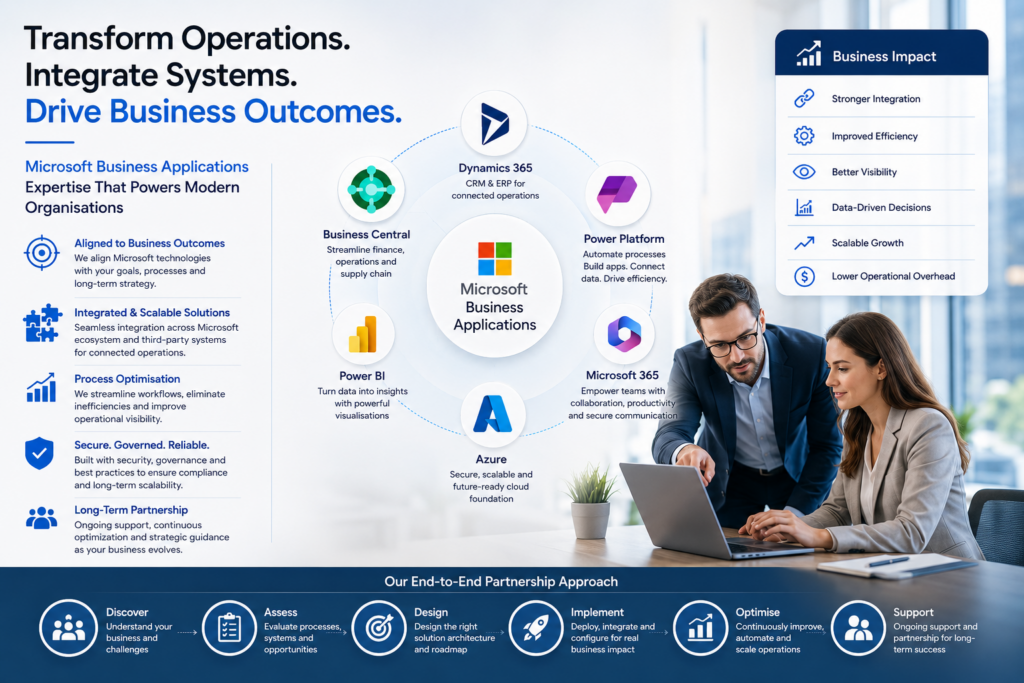
Microsoft Dynamics 365 covers a broad ecosystem—finance, sales, marketing, supply chain, HR, and more. A strong partner should demonstrate proficiency across relevant modules and adjacent technologies like Power Platform, Azure, and Microsoft 365. Certifications and Microsoft accreditations can serve as indicators of capability, but hands-on experience should weigh more heavily in your decision.
- Approach to Customisation
Every organisation will need some level of customisation. The right partner balances out-of-the-box functionality with tailored enhancements, ensuring solutions remain scalable and easy to maintain. Be cautious of partners who lean too heavily on custom code, as this can create long-term maintenance challenges. Instead, look for those who embrace configuration, low-code tools, and future-proof design.
- Change Management and Training
Technology alone does not guarantee success—people do. Adoption hinges on how well users understand and embrace new systems. The most effective partners embed change management and training into their methodology, providing workshops, documentation, and hands-on support to empower employees.
Red Flags to Watch Out For
Not all partners operate at the same standard. As you compare options, be mindful of warning signs that could indicate trouble down the track:
- Overpromising: Unrealistic timelines or budget estimates often lead to disappointment later.
- Lack of Transparency: If a partner cannot provide clear project governance or open communication channels, misalignment is likely.
- Limited Post-Go-Live Support: Implementation is only the beginning. Without ongoing support, businesses may struggle to maintain momentum.
- Narrow Focus: A partner who only specialises in one module or lacks integration experience may be unable to meet your long-term needs.
The Role of Consulting Services
Another important consideration is whether the partner offers comprehensive dynamics 365 consulting services. These services extend beyond technical implementation to include strategy, process optimisation, data governance, and performance measurement.
Consulting expertise ensures that your investment in D365 is aligned with broader business objectives. For example, a consultant may identify opportunities to automate workflows, integrate data streams, or build dashboards that deliver actionable insights to leadership teams. These value-added services can significantly increase ROI.
Local vs. Global Partners
With D365’s cloud-based architecture, businesses can choose between local or global partners. Both options have advantages.
- Local partners often provide better cultural alignment, time-zone compatibility, and in-person support. They may also have a stronger grasp of local regulatory requirements.
- Global partners bring extensive resources, global delivery models, and broader industry exposure.
For many organisations, the ideal choice is a partner who blends local presence with access to global best practices.
Long-Term Partnership and Innovation
When evaluating partners, it is crucial to look beyond the initial implementation. D365 is constantly evolving, with new features, updates, and integrations released regularly. Your partner should act as an innovation ally, helping your business leverage new capabilities as they emerge.
Ask potential partners how they keep clients informed about updates, how they approach system optimisation, and how they proactively recommend improvements. The strongest relationships are built on ongoing collaboration, not one-off projects.
Making the Right Decision
Choosing the right D365 partner is not just about cost or speed—it is about finding a collaborator who understands your business, aligns with your goals, and provides long-term value. By carefully evaluating expertise, technical competence, approach to customisation, and commitment to user adoption, businesses can select a partner who will drive real digital transformation.
As microsoft dynamics partners australia continue to expand their offerings, the decision-making process may feel overwhelming. Yet with clear criteria and a strategic mindset, organisations can identify the partner that best fits their unique requirements.
At Newpath, we believe the right partner relationship is as important as the technology itself. With the right guidance and collaboration, Microsoft Dynamics 365 becomes more than a system—it becomes a catalyst for growth, efficiency, and innovation.