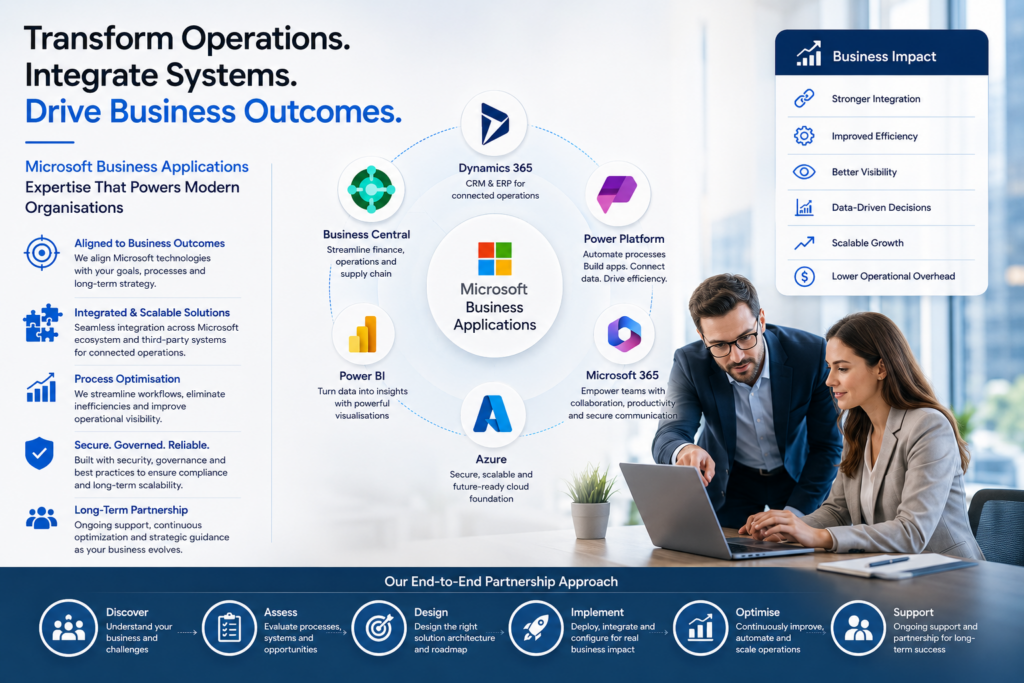


Buying the right software is only half the decision. The other half, and often the part that determines whether a system actually delivers, comes down to who sets it up and supports it afterwards. Australian businesses evaluating Microsoft Dynamics 365 partners are quickly learning that the platform’s reputation for flexibility means very little if the implementation behind it is rushed, generic, or poorly matched to how the business actually operates. The platform can only ever be as good as the thinking that goes into configuring it.
What Microsoft Dynamics 365 Actually Involves
Dynamics 365 is not a single piece of software so much as a family of connected business applications covering sales, customer service, finance, operations, and more. A business can start with one module and add others as needs grow, which is part of why it appeals to organisations at very different stages, from a small professional services firm managing client relationships to a larger operation running finance and inventory across multiple sites. That modularity is a genuine strength, but it also means two businesses using Dynamics 365 can end up with setups that look almost nothing alike, shaped entirely by which modules they chose and how they configured them.
Why the Partner Matters More Than the Platform
Businesses often invest significant time and budget in a Dynamics 365 rollout with good intentions, only to find the system doesn’t quite fit how the team actually works. Reports get built around fields nobody uses. Staff find workarounds instead of relying on the platform as intended. Adoption stalls, and the investment that was meant to improve visibility ends up sitting half used. None of this happens because Dynamics 365 is a weak platform. It happens when the setup around it does not reflect the business closely enough from the start.
A capable partner spends real time understanding how a business actually runs before configuring anything, mapping out client or customer journeys, existing workflows, and the reporting that leadership actually relies on. That groundwork shapes every decision that follows, from which modules get switched on to how permissions and dashboards are structured for different teams.
What Business Central Solves for Growing Businesses
For small and mid-sized businesses specifically, Microsoft Dynamics 365 Business Central tends to be the entry point into the platform. It brings financial management, inventory control, sales and purchase orders, and customer service into a single connected system, replacing the patchwork of spreadsheets and disconnected tools that many growing businesses rely on by default. A business tracking stock in one system, invoicing in another, and managing customer records somewhere else loses time reconciling all three, and loses accuracy along the way. Business Central pulls that information into one place, giving leadership a clearer, more current view of how the business is actually performing.
The appeal for growing businesses is that Business Central scales without demanding a complete rebuild later. A company that starts with basic financial and inventory tracking can add sales automation, service management, or deeper reporting as it grows, rather than outgrowing the platform and needing to migrate to something else entirely. That matters most for businesses that have already lived through one painful system migration and have no interest in repeating the experience every few years as their needs change.
Signs of a Capable Implementation Partner
A handful of qualities tend to separate a strong implementation partner from one that leaves a business worse off than before it started.
- They ask detailed questions about existing workflows before recommending any configuration
- They explain trade-offs clearly, rather than presenting every recommendation as the only sensible option
- They plan for integration with the tools a business already relies on, instead of treating Dynamics 365 as a replacement for everything at once
- They stay involved after go-live, since real adoption issues tend to surface only once staff are using the system daily
- They can point to experience across businesses of a similar size or industry, or explain clearly how they approach an unfamiliar one
Integration Beyond the Core Platform
Very few businesses run Dynamics 365 in isolation. Websites, customer portals, marketing platforms, and document management systems often sit alongside it, and a strong partner treats connecting these systems as part of the job rather than an afterthought. Automating the handoff between a website enquiry and a sales record, or between a completed project and an invoice, removes exactly the kind of manual data entry that causes errors and wastes staff time. The value of Dynamics 365 grows considerably once it stops operating as a standalone system and starts working alongside everything else a business already uses, from the customer relationship management tools a sales team lives in to the finance software an accounts team refuses to give up.
Getting the Setup Right From the Start
At Newpath, we work with businesses at every stage of this process, from initial planning through to implementation, integration, and ongoing support once a system is live. We focus on understanding how a business actually operates before any configuration begins, because that determines whether Microsoft Dynamics 365 Business Central becomes a tool the team relies on daily or a system quietly worked around within a year. If your business is considering Dynamics 365 or feels like an existing setup is not delivering what it should, get in touch with the Newpath team to talk through what a properly considered implementation actually looks like.