




Customer relationship management (CRM) systems are no longer a luxury; they’re a business imperative. But many companies are still stuck on legacy CRM platforms that just can’t compete in the modern era. By 2025, Microsoft Dynamics 365 (D365) will have clearly proven itself as the leading alternative. D365 gives businesses the agility, intelligence, and scalability they need to succeed in today’s digital-first economy.
As a digital services agency with a long history, Newpath has partnered with hundreds of organisations at various stages of the CRM journey. We have seen firsthand why organisations that move to D365 are better positioned to compete and grow than those who remain stuck on legacy systems.
The Limitations of Legacy CRM
Legacy CRM systems were built to store customer data and manage the sales pipeline, and for a time, they were sufficient for these tasks. But today, they create obstacles and drag organisations down. Obstacles include:
- Siloed data: Legacy CRMs typically don’t integrate well with other core business applications, creating fragmented customer insights.
- High maintenance costs: The on-premises infrastructure and outdated software versions of legacy systems are resource-intensive to maintain.
- Limited scalability: Scaling up or down, or adding new capabilities, is often slow and costly.
- Poor user adoption: User interfaces from years ago often frustrate employees, discouraging active use.
In summary, legacy CRM platforms still work, but they slow down innovation and limit the ability to provide the frictionless customer experiences needed in today’s markets.
Dynamics 365: A Modern CRM Powerhouse
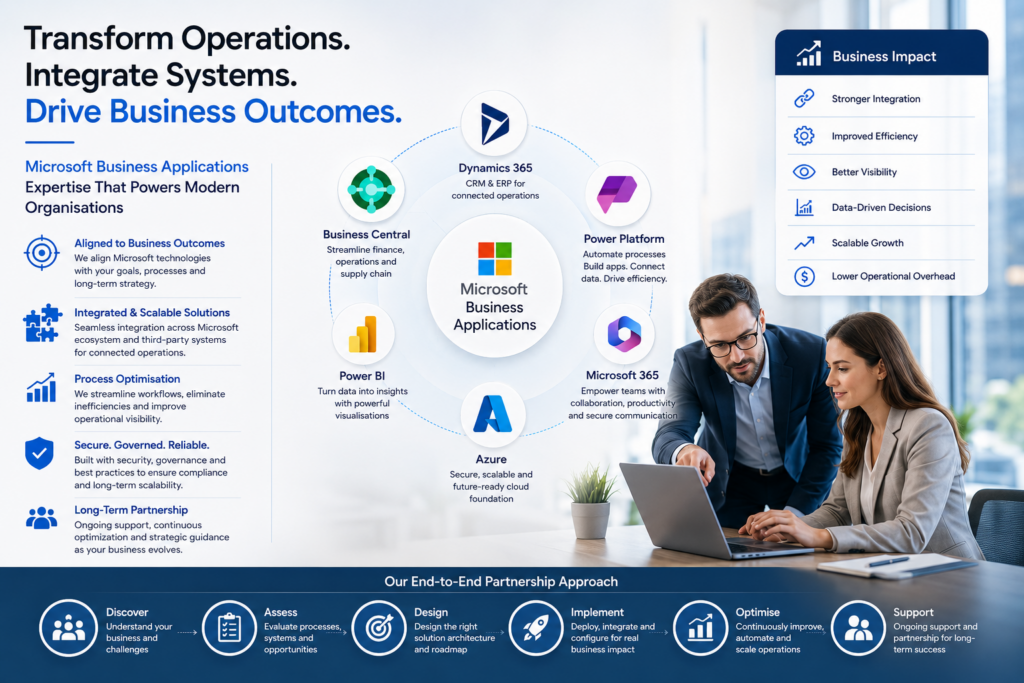
Dynamics 365 (D365) has elevated the concept of CRM from a standalone system to an end-to-end suite, orchestrating customer engagement, sales, marketing, service, and finance into a single, intelligent cloud platform.
D365 takes a holistic approach to business, moving beyond simple contact management or sales pipelines, to unifying data, processes, and people into a cohesive whole.
Some of the platform’s defining strengths include:
- Endless cloud scalability: D365 is built in the cloud, so there are no hardware or software hassles, and your business can scale up (or down) in a matter of minutes to match your needs.
- Intelligence at your fingertips: D365 integrates seamlessly with the rest of the Microsoft business stack, including Azure, Power Platform, and Office 365, creating a powerful feedback loop across all customer touchpoints.
- Artificial intelligence: D365’s built-in analytics and machine learning technologies offer predictive forecasting, personalised recommendations, next-best actions, and proactive service.
- Constant innovation: Regular updates and new capabilities from Microsoft keep businesses always up-to-date with the latest technology and features.
In short, by choosing D365, businesses are not just embracing the future of CRM – they’re future-proofing their entire operation..
Real Business Impact
The benefits of moving to D365 are not abstract. Businesses across industries have experienced measurable improvements in efficiency, customer satisfaction, and growth. For example:
- Sales teams report faster deal cycles through AI-driven lead scoring and automated workflows.
- Customer service departments achieve higher satisfaction rates with omnichannel support tools and knowledge-driven case management.
- Finance and operations teams streamline their reporting and compliance requirements with built-in integration to ERP functions.
At Newpath, our delivery of Dynamics 365 consulting services has shown that the ROI is both immediate and long-term. Cost savings from retiring legacy infrastructure are paired with revenue growth generated by improved customer insights and engagement.
Overlooked Advantages Businesses Miss
While many organisations recognise the obvious benefits of cloud CRM, some of D365’s most valuable advantages are still underappreciated:
- Seamless Microsoft integration: For businesses already using Office 365, Teams, or Power BI, the ability to embed CRM insights directly into everyday tools boosts adoption and productivity.
- Security and compliance: Built on Microsoft’s secure cloud, D365 meets stringent compliance requirements, which is increasingly vital in regulated industries.
- Personalisation at scale: With unified customer data, businesses can deliver personalised marketing and service experiences across multiple channels.
These capabilities transform CRM from a back-office tool into a front-line driver of competitive advantage.
Migration as a Strategic Opportunity
Many organisations hesitate to move away from legacy systems due to perceived migration complexity. However, 2025 has shown that migration to D365 is less a burden and more a strategic opportunity.
By approaching migration with expert support, businesses can clean and standardise their data, streamline inefficient processes, and adopt best practices that were previously out of reach. Far from being disruptive, migration can be the catalyst for operational renewal.
This is where the value of a trusted partner comes in. At Newpath, we specialise in guiding businesses through this transition, ensuring that implementation aligns with both immediate goals and long-term digital strategies.
Why D365 Outpaces Legacy CRM
When comparing Dynamics 365 to legacy CRM platforms, the reasons for switching are clear:
- Adaptability: Legacy systems struggle with evolving customer expectations, while D365 evolves continuously with new features and AI-driven tools.
- Cost-effectiveness: The cloud model eliminates maintenance burdens and enables pay-as-you-grow scalability.
- Customer focus: D365 empowers businesses to provide experiences that are proactive, personalised, and consistent—something legacy platforms simply cannot match.
In 2025, clinging to a legacy CRM is not simply a missed opportunity—it is a liability that limits competitiveness. By contrast, the Microsoft Dynamics 365 crm solution offers organisations a pathway to growth, efficiency, and digital leadership.
The business environment has never been more competitive or customer-centric. To keep pace, organisations require tools that are flexible, intelligent, and deeply integrated into the way people work. Dynamics 365 has proven itself as the superior platform, leaving legacy CRM systems behind.
At Newpath, we believe the question is no longer whether to move on from legacy CRM, but how quickly you can unlock the advantages of D365. By embracing this modern solution, businesses not only address current challenges but also position themselves for sustained success in an increasingly digital future.