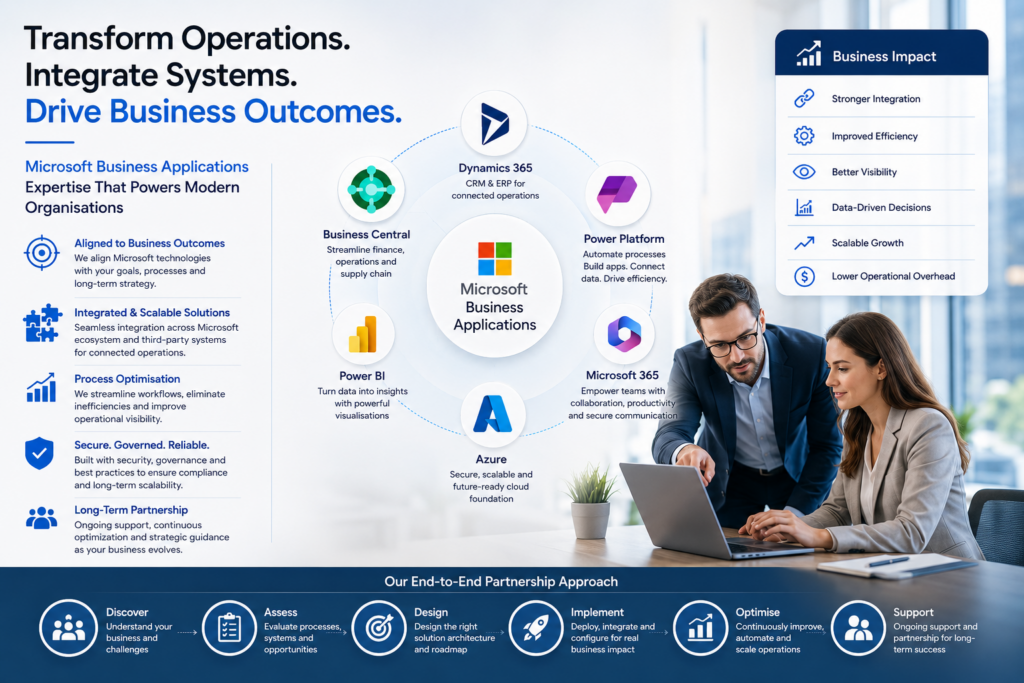





Digital transformation is no longer optional—it is the backbone of modern business strategy. Organisations are under constant pressure to innovate, streamline operations, and enhance customer experiences, all while maintaining security and compliance in an increasingly complex landscape. In 2025, a growing number of businesses are finding that legacy systems can no longer keep pace. The result? A decisive shift toward Microsoft Dynamics 365 (D365), a unified cloud platform that combines enterprise resource planning (ERP) and customer relationship management (CRM) capabilities with advanced analytics and automation.
At Newpath, we have seen firsthand how D365 is transforming organisations across industries. The reasons for its adoption are compelling, from scalability and integration to its AI-driven insights that enable businesses to operate smarter and faster.
Legacy Systems: A Barrier to Growth
Many organisations still rely on outdated, siloed systems to manage core business processes. While these platforms may have served well in the past, they now pose significant challenges: limited scalability, high maintenance costs, and an inability to support modern customer expectations.
Traditional CRM tools, for example, often lack flexibility and fail to deliver a unified view of the customer. ERP systems, meanwhile, can be rigid and resource-intensive, requiring costly upgrades and manual workarounds to remain functional. Together, these limitations slow down decision-making and inhibit innovation.
Microsoft Dynamics 365 was designed to overcome these challenges, offering a single, cloud-based platform that replaces fragmented systems with a cohesive, agile foundation for growth.
The Power of an Integrated Platform
One of the biggest drivers of D365 adoption is its ability to seamlessly integrate business processes. Instead of managing multiple applications for finance, sales, marketing, customer service, and supply chain, organisations can operate from a single source of truth.
This integration delivers clear benefits:
- Improved collaboration: Teams can access consistent, real-time data across departments, breaking down silos.
- Streamlined workflows: Automated processes reduce manual tasks and errors.
- Data-driven insights: With analytics embedded into the platform, leaders can make informed decisions faster.
For businesses, this means improved efficiency and greater agility to adapt to changing market demands.
AI and Automation: Enabling Smarter Work
In 2025, artificial intelligence (AI) is no longer a futuristic concept—it is a daily necessity for competitive businesses. Dynamics 365 integrates AI at its core, enabling predictive analytics, intelligent recommendations, and automated customer interactions.
Features such as Copilot, Microsoft’s AI assistant, are embedded within workflows, helping employees generate reports, analyse data, and even draft customer communications. This not only boosts productivity but also empowers staff to focus on higher-value tasks.
Automation extends beyond AI-driven insights. With tools like Power Automate and Power Apps, businesses can create low-code solutions to handle repetitive tasks or build custom apps without the need for extensive IT resources. This democratisation of development has become a game-changer for organisations looking to innovate quickly.
Security and Compliance at the Forefront
In an age where cyber threats and regulatory pressures are escalating, security is a top priority for CIOs and business leaders. Dynamics 365 offers enterprise-grade security features, including role-based access, encryption, and advanced threat detection.
Because it is hosted on Microsoft’s Azure cloud, D365 also benefits from compliance with global standards, giving businesses confidence that sensitive data is protected. For regulated industries such as healthcare, finance, and government, these assurances are critical.
Scalability for Future Growth
Another reason businesses are moving to D365 is its ability to scale seamlessly. Whether an organisation is a mid-sized company planning international expansion or a global enterprise managing complex supply chains, the platform can grow with the business.
Unlike legacy systems that often require costly infrastructure upgrades, D365 operates on a flexible subscription model. Organisations pay for what they need and can easily add functionality as their requirements evolve. This scalability makes it an attractive option for businesses seeking long-term value and adaptability.
Overlooked but Essential: The Human Factor
While technology is the enabler, success with D365 also depends on people. Adopting a new system requires cultural alignment, training, and change management to ensure employees embrace new ways of working.
Too often, organisations underestimate the importance of adoption strategies. This is where working with experienced dynamics 365 consulting services can make a tangible difference. By guiding businesses through implementation, integration, and user adoption, these experts ensure that the platform delivers on its promise.
Real Business Value with D365 CRM
At the heart of D365’s popularity is its ability to transform customer engagement. The microsoft dynamics 365 crm solution provides organisations with a unified view of their customers, enabling hyper-personalised experiences across every touchpoint. From predictive lead scoring to proactive service interventions, businesses can strengthen relationships, build loyalty, and drive revenue growth.
By combining CRM with ERP in one platform, organisations gain a holistic view of both customer interactions and operational performance, creating opportunities to align strategy with real-time insights.
The New Standard for Digital Transformation
The wave of businesses migrating to D365 in 2025 reflects more than just a technology upgrade—it represents a strategic shift. Legacy systems can no longer support the pace of modern commerce, while Dynamics 365 offers the agility, intelligence, and security organisations need to thrive.
For CIOs and business leaders, the decision to move to D365 is not just about keeping up with competitors; it’s about gaining a competitive edge. The platform’s combination of integrated functionality, AI capabilities, and scalability positions it as a cornerstone of digital transformation strategies across industries.
At Newpath, we continue to help organisations unlock the full potential of Dynamics 365, from planning and implementation to optimisation and innovation. Businesses that embrace this shift are not only addressing today’s challenges but also preparing for the opportunities of tomorrow.