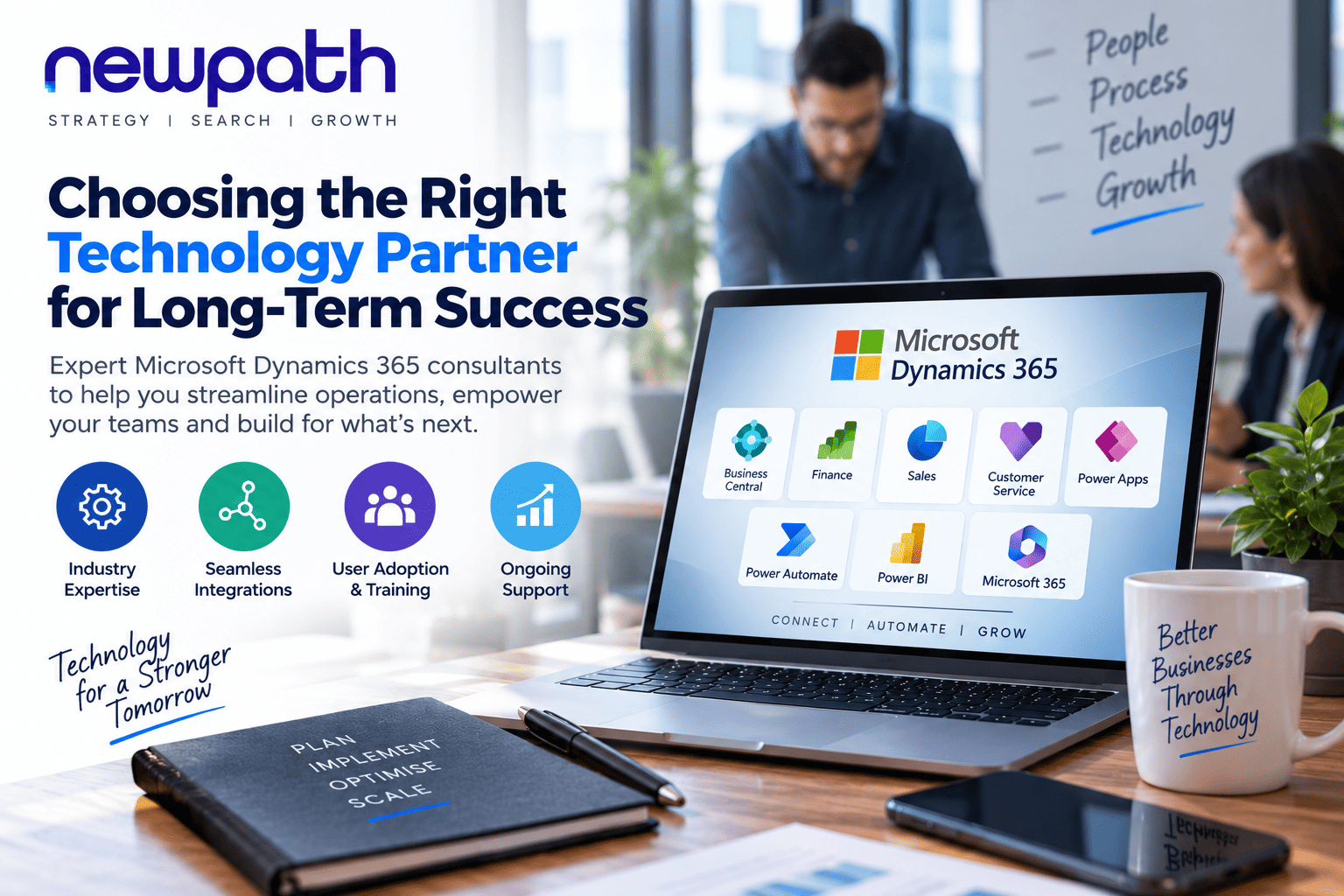




For Australian small and medium enterprises (SMEs), selecting the right customer relationship management (CRM) system is a pivotal decision that impacts growth, efficiency, and customer satisfaction. The choice often comes down to two giants: Salesforce, a well known player in the space, or Microsoft Dynamics 365 (D365), the integrated contender. As a Melbourne based digital agency, Newpath has guided numerous SMEs through this decision, delivering solutions that save costs, streamline operations, and drive results. In 2025, Australian businesses are increasingly choosing D365 for its affordability, seamless Microsoft ecosystem integration, and practical innovation. This article explores the key differences between D365 and Salesforce, backed by 2025 data and real world insights, to help CIO’s and CEOs optimise budgets, CMOs enhance customer engagement, and technical directors build scalable systems. Join us to discover why D365 is becoming the preferred choice for Australian SMEs aiming to thrive in a competitive market.
Understanding the Contenders: D365 and Salesforce at a Glance
Salesforce, launched in 1999, pioneered cloud based CRM, evolving into a comprehensive platform with Sales Cloud, Service Cloud, and Marketing Cloud. Serving over 150,000 global customers, it offers a vast AppExchange marketplace with 7,000 plus apps. In 2025, Salesforce’s AI driven Einstein predicts customer behaviours and automates tasks, making it ideal for large organisations with complex needs.
D365, introduced in 2016, combines CRM with enterprise resource planning (ERP), covering sales, customer service, and operations. With 200,000 plus customers worldwide, it gains traction in Australia due to Microsoft’s local data centres ensuring compliance with the Australian Privacy Principles. Its modules, such as Sales and Customer Insights, integrate natively with Microsoft 365 tools like Teams and Outlook, creating a unified experience for businesses already using Microsoft.
For SMEs, the choice hinges on ecosystem fit. Salesforce excels in sales heavy customisation, while D365 shines in integrated operations. A 2025 Gartner report shows 65 per cent of Australian SMEs prefer D365 for its lower entry barriers, compared to Salesforce’s steeper costs and complexity.
Cost Comparison: Affordability for SME Budgets
Australian SMEs operate in a challenging economic climate, with rising costs and competitive pressures. Salesforce’s pricing starts at $25 per user per month for Essentials, but scales to $150 for Professional and $325 for Enterprise, with Einstein adding $50. For a 50 user team, annual costs could exceed $200,000, including implementation fees of 50 per cent or more.
D365 offers a budget friendly model. Dynamics 365 Sales Professional costs $95 per user per month, with Enterprise at $165, and Business Central (including ERP) at $105. Per app plans at $20 let SMEs pay only for needed features. A 2025 Forrester study finds D365’s total cost of ownership (TCO) is up to 50 per cent lower than Salesforce over three years, thanks to simpler customisation and free Microsoft integrations.
A Newpath client, a mid sized retailer, switched to D365, saving 35 per cent on CRM costs while integrating inventory management, freeing budget for marketing.
Integration and Ecosystem: Streamlining Workflows
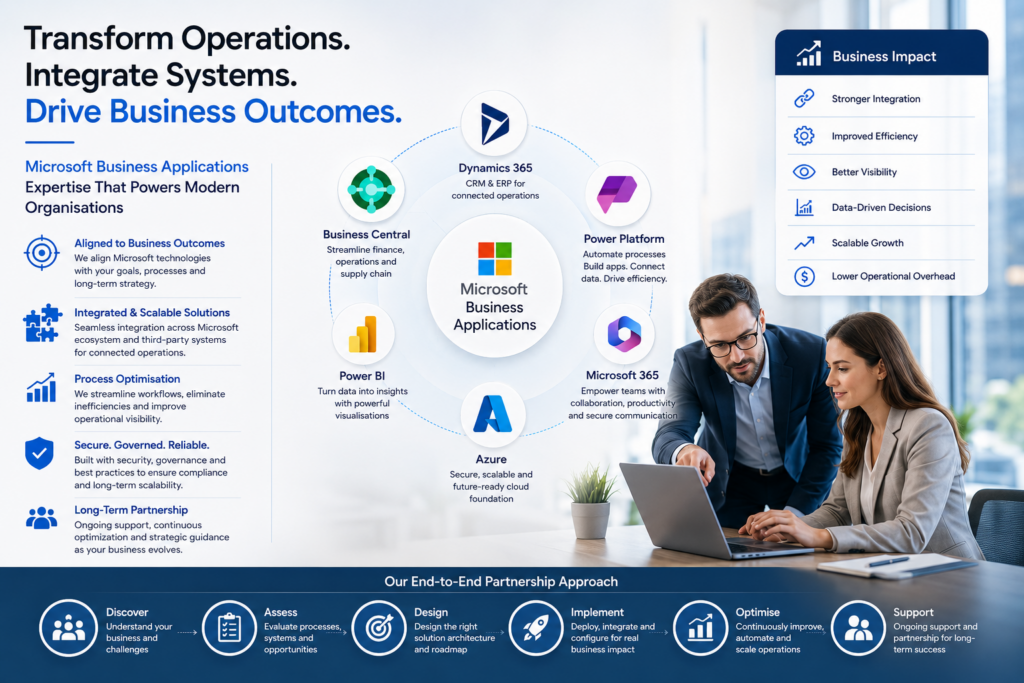
SMEs rely on integration to connect CRM with existing tools, from accounting software to customer portals. D365’s native Microsoft ecosystem ties make this seamless. It syncs with Office 365, Power BI for analytics, and Azure for hosting, ensuring data flows without custom coding. For example, a sales team can update a lead in D365, instantly reflecting in Outlook calendars and Teams chats.
Salesforce’s integrations, while robust via AppExchange’s 7,000 apps, often require third party costs or tools like Zapier for Microsoft connectivity, adding complexity. A 2025 Intelegain report rates D365’s integration at 9/10 versus Salesforce’s 8/10, citing Microsoft’s unified platform.
Newpath integrated D365 with a client’s Azure setup in weeks, versus months for Salesforce. For businesses using tools like Xero or HubSpot, D365’s Power Automate enables automated workflows, such as syncing leads to finance systems, boosting efficiency by 30 per cent.
Usability and Customisation: Empowering SME Teams
Usability is critical for SMEs with limited training resources. D365’s interface, familiar to 80 per cent of Australian businesses using Office 365, reduces onboarding time. Role based dashboards provide tailored views, like a sales manager seeing pipeline data alongside customer queries.
Salesforce’s interface, while powerful, can overwhelm with its complexity, requiring more training. D365’s low code Power Apps allow quick customisations, like adding a feedback form, without developers. Salesforce’s Lightning Experience offers similar, but its intricacy often drives higher consultant costs.
A 2025 Research.com guide scores D365 at 4.5/5 for usability among SMEs, versus Salesforce’s 4/5. A Newpath client in professional services cut training time by 50 per cent with D365, letting staff focus on core tasks.
AI and Innovation: Driving Smarter Business
AI is transforming CRM in 2025, and D365’s Copilot leads with natural language tools for drafting emails, predicting trends, and automating tasks like lead follow ups. Built into base plans, it ensures accessibility for SMEs and complies with Australia’s data laws.
Salesforce’s Einstein offers predictive scoring and chatbots but adds $50 per user. D365’s inclusive AI delivers more value. A 2025 Argologic report praises D365’s agentic AI for predictive analytics, such as forecasting sales, improving outcomes by 15 per cent.
Newpath used Copilot for a client to automate lead scoring, boosting conversions by 18 per cent, proving D365’s innovation edge for SMEs.
Why Australian SMEs Choose D365
Australian SMEs face unique pressures: tight budgets, regulatory compliance, and competition from larger players. D365 addresses these effectively:
-
Compliance: Microsoft’s Sydney and Melbourne data centres ensure data sovereignty, aligning with the Australian Privacy Principles.
-
Affordability: Lower TCO and flexible pricing save 25 per cent versus Salesforce, per 2025 benchmarks.
-
Integration: Seamless Microsoft 365 connectivity streamlines workflows for 70 per cent of businesses using Microsoft tools.
-
Scalability: Modular design supports growth, like adding Customer Service for support teams.
A 2025 Dynamicssmartz report shows 60 per cent of Australian SMEs choose D365 for cost and ease. Its Sales module personalises customer journeys, a feature Salesforce requires costly add ons for.
Newpath’s Approach: Making D365 Work for SMEs
At Newpath, we tailor D365 to SMEs, ensuring measurable outcomes. Here’s how:
Modular Implementation
We start with D365 Sales or Customer Service, scaling to Business Central for operations, as we did for a client in three months, saving 20 per cent on setup costs.
Custom Integrations
We can connect D365 to Xero and other platforms ensuring real time data sync for finance, or support tracking.
User Training
Our tailored training, delivered in person or via Teams, cuts onboarding by 30 per cent, empowering staff to focus on business goals.
Performance Monitoring
We use Azure Monitor to track D365 performance, ensuring 99.9 per cent uptime, as achieved for a client’s CRM.
Real World Impact: SMEs Thriving with D365
Our clients demonstrate D365’s value. A professional services firm saw 20 per cent higher customer retention with D365’s personalised follow ups. A retail SME boosted conversions by 25 per cent using Copilot’s insights, saving $150,000 versus Salesforce. These align with Amazon’s 2025 data: a one per cent revenue increase per 100 milliseconds of system efficiency.
D365’s open source community and Microsoft’s 2025 Wave 2 updates (e.g., role based Copilot) ensure future readiness, keeping your business competitive.
Addressing Concerns: Is D365 Right for You?
Some worry D365 lacks Salesforce’s customisation depth. While Salesforce’s AppExchange offers more apps, D365’s Power Platform covers what SME needs at lower cost. We assess your requirements in discovery workshops, recommending Salesforce only for rare, complex cases.
Performance is another concern. D365’s near real time processing meets all needs on this front.
Why Partner with Newpath?
Newpath has transformed SMEs with D365, delivering cost effective, scalable solutions across industries. Our process, from strategy to support, ensures your CRM drives growth and efficiency. Don’t let high costs or complexity hold you back. The future of customer engagement starts here.