




Quick Summary
A digital transformation consultant is an outside expert who helps your business plan, sequence and deliver technology change that improves how the business runs. At Newpath, we find the technology is rarely the hard part; deciding what to change first is. Consulting work splits into diagnosis, design and delivery oversight.
- Consultants own strategy, the business case and vendor-neutral technology choice, while implementation teams own configuration, integration and testing.
- A workable strategy framework has four layers: business outcomes, capability gaps, initiatives and governance.
- A roadmap template should name what you are not doing, because a roadmap with no exclusions is a wish list.
- Sequence work by dependency: foundational data before analytics, and process automation after the process is simplified.
- Judge fees against diagnosis quality, roadmap specificity and whether the proposal includes a handover plan.
Table of Contents
- What a Digital Transformation Consultant Actually Does for Your Business
- Building a Digital Transformation Strategy Framework That Survives Contact With Reality
- What Belongs in a Digital Transformation Roadmap Template
- The Cost of Digital Transformation Consulting in Australia and How to Judge It
- How to Select a Digital Transformation Consultant Without Getting Burned
- Scoping Your Transformation With Newpath
- Frequently Asked Questions
What a Digital Transformation Consultant Actually Does for Your Business
A digital transformation consultant is an outside expert who helps a business plan, sequence and deliver technology change that improves how the business runs.
Consulting work splits into three broad jobs:
- Diagnosis: mapping current systems, data and processes to find where value leaks
- Design: choosing a target operating model and a realistic sequence of work
- Delivery oversight: keeping vendors, internal teams and budgets aligned
The Hackett Group’s 2026 research on digital operations points to AI and cloud modernisation as the main focus of this work.
That second theme matters more than most buyers expect. A consultant who leaves behind a plan but no capability has solved half the problem.
Where consulting ends and implementation begins
The cleanest split is between deciding and building. Consultants own the strategy, the business case and the vendor-neutral technology choice. Implementation teams own configuration, integration and testing.
In practice the line blurs. If you are moving from strategy into delivery, our guide to 5 proven strategies for a successful Microsoft Dynamics 365 implementation covers the tactics that keep a build on track.
Building a Digital Transformation Strategy Framework That Survives Contact With Reality
Most transformation strategies fail at the same point: they assume the business will hold still. It won’t. A framework earns its keep only if it survives a bad quarter, a leadership change or a budget freeze.
A workable digital transformation strategy framework has four layers:
- Business outcomes stated as measurable targets, not slogans
- Capability gaps ranked by how much they block those outcomes
- Initiatives mapped to each gap, with an owner and a cost
- Governance that reviews progress on a fixed rhythm
Uncoordinated pilots can create integration debt, and integration debt is expensive to unwind.
Watch out: teams often approve five initiatives when they can realistically deliver two. The other three stall halfway and consume the budget for the next year.
What Belongs in a Digital Transformation Roadmap Template
A digital transformation roadmap template is a one-page plan that shows what changes, in what order, and what it depends on. It is not a Gantt chart. It is a decision tool.
Include these fields:
- Initiative name and owner
- Business outcome it serves
- Dependencies on other work or systems
The template earns trust when it names what you are not doing. A roadmap with no exclusions is a wish list.
Sequencing work so operations keep running
Sequence by dependency, not by enthusiasm. Foundational data work comes before analytics. Identity and access work comes before customer-facing personalisation. Process automation comes after the process itself is simplified, or you automate the mess.
Run change in parallel tracks so no single quarter carries all the disruption. Keep one track purely on operational efficiency and stability, and let the visible customer experience work ride alongside it.
The Cost of Digital Transformation Consulting in Australia and How to Judge It
Pricing depends on scope, seniority mix, duration and how much delivery sits inside the engagement. What buyers can do is understand the cost drivers, insist on a transparent rate card, and build a business case that ties spend to measurable outcomes.
The four cost drivers that move the number most
- Scope boundary. A discovery and roadmap engagement is a fraction of the cost of a program that includes delivery oversight across multiple quarters. Be explicit about where consulting stops and implementation starts.
- Seniority mix. A partner-led diagnosis costs more per day than a junior-heavy team, but a weak diagnosis is the most expensive line item in any program. Ask for the named team and the proportion of senior time.
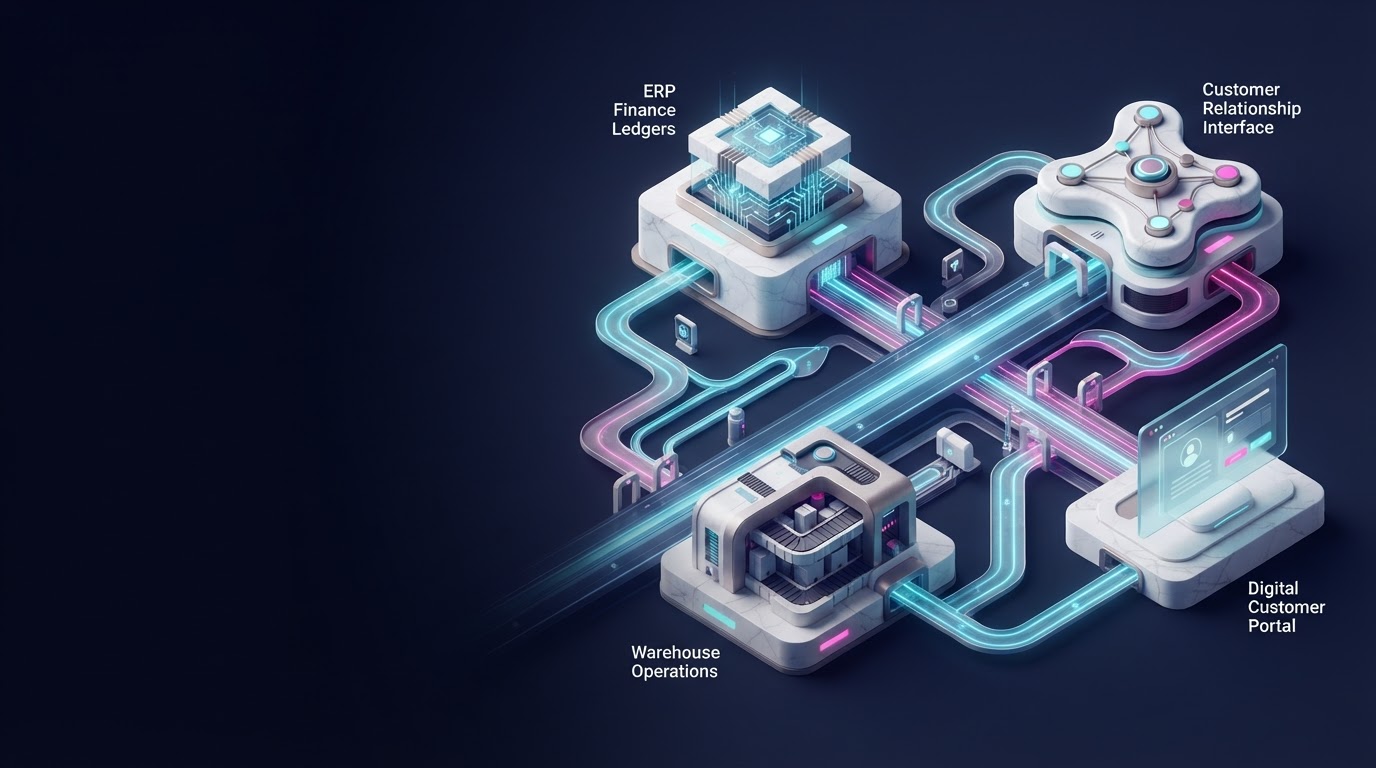
- Number of systems and data sources in scope. Integration complexity scales with the count of legacy systems, the quality of their data and whether they are cloud or on-premises. A program touching one ERP is not the same as one touching ERP, CRM, HRIS and a data warehouse.
- Change management intensity. Regulated industries, unionised workforces and multi-site operations need more change effort per initiative. That effort is real cost, not overhead.
Pricing models you will encounter
| Model | How it works | Best for |
|---|---|---|
| Fixed-scope | Agreed deliverable, agreed fee | Well-defined discovery or audit |
| Time and materials | Hourly or daily rates | Evolving scopes |
| Retainer | Ongoing advisory capacity | Long programs needing continuity |
| Outcome-linked | Fee tied to agreed measures | Mature buyers with clean data |
Outcome-linked fees are attractive but only work when the baseline data is trustworthy and the measures are within the consultant’s control.
Building a business case that survives scrutiny
A credible business case has four parts:
- Baseline. Current cost, cycle time, error rate or customer metric, measured before work starts.
- Target. The specific improvement you expect, with a date.
- Investment. Consulting fees, internal staff time, technology licences and change costs, all in AUD.
Watch out: business cases that count only licence savings and ignore internal staff time tend to overstate payback.
How to judge whether the fee is fair
Judge cost against three things: the quality of the diagnosis, the specificity of the roadmap, and whether the proposal includes a handover plan. A cheap proposal with a vague scope can prove the most expensive option. Ask for rates in writing, ask what happens if scope moves, and ask which assumptions would change the price. For current pricing, contact us for a quote against your scope.
How to Select a Digital Transformation Consultant Without Getting Burned
Selection comes down to evidence. Most buyers compare proposals on price and presentation; the better approach is a structured framework that scores candidates on the things that predict delivery success.

A five-part selection framework
Score each shortlisted firm out of five on each dimension, and require evidence rather than assertion.
- Relevant experience. Named projects in your sector, at your scale, with outcomes you can verify. Ask for two references you can call and one the firm did not choose.
- Delivery model. Does the firm advise only, or advise and build? Both are legitimate, but the model must be clear before you sign. If the same firm scopes and delivers, insist on an independent estimate check.
- Team composition. Who is actually on the engagement, how many days each, and what proportion is senior? A partner who appears at pitch and disappears at kick-off is a common failure pattern.
- Method and artefacts. What will you receive, a diagnosis, a roadmap, a business case, a governance pack? Ask to see a redacted example of each.
- Commercial terms. Rate card, scope-change mechanism, IP ownership, exit and handover clauses. These are where disputes start.
Questions that expose a weak proposal
Four questions separate a real plan from a pitch:
- “What would you tell us not to do?” A weak proposal has no exclusions.
- “Who owns the data migration?” Vague answers here predict trouble.
- “What does week one look like?” Good consultants can describe it precisely.
- “How do we exit?” Vendor lock-in is a design choice, not a fate.
Add two more for regulated or multi-site businesses: “Which regulator or compliance regime have you worked under?” and “How do you handle a site that resists the change?” The answers reveal whether the firm has done the work or only read about it.
Red flags in the contracting stage
- Scope described only in deliverables, with no acceptance criteria.
- No named team, or a team that changes between proposal and contract.
- Rates quoted without a seniority breakdown.
Watch out: a proposal that recommends a specific platform before it has mapped your systems is a sales document, not a consulting proposal. Vendor-neutral advice starts with your requirements, not a product.
A simple scorecard
Use a one-page scorecard with the five dimensions above, weighted to your priorities. Require each firm to submit the same artefacts, a draft roadmap outline, a named team, a rate card and two references, so the comparison is like for like. Our projects page shows the sectors we have delivered in.
Scoping Your Transformation With Newpath
Scoping is where most programs are won or lost. A tight scope produces a roadmap you can fund and defend. A loose scope produces a document nobody uses.
Newpath has more than 15 years of experience, 200+ creative and technical staff across three countries, and a tech-agnostic approach to design, development and strategic consulting. We work across SME, government, not-for-profit, healthcare, associations, e-retail and financial services.
Our 5 Day Innovation Sprint is built for exactly this stage. If you want the detail on the consulting-to-implementation handoff, read what Dynamics 365 consulting services involve.
Frequently Asked Questions
What does a digital transformation consultant do for a business?
A digital transformation consultant maps how your business currently runs, identifies where legacy systems and manual processes cost you time or customers, and sets a sequenced plan to fix them. That covers operating model design, technology integration, data analytics and change management. Good consultants stay through implementation rather than handing over a slide deck.
How much does digital transformation consulting cost in Australia?
There is no single rate. The cost of digital transformation consulting in Australia depends on scope, how many systems need integrating, whether you need design and development as well as strategy, and the length of the engagement. Fixed-scope discovery work is priced differently from a multi-year program. Ask for a breakdown of phases, deliverables and who does the work. Newpath publishes current pricing and quotes on request, so you can compare like for like rather than against a vague day rate.
How do I choose the best digital transformation partner for my organisation?
Test three things. First, ask for a case study in your sector, not a generic one. Second, ask how they will handle data mapping across your existing ERP and CRM systems, and get a named method rather than reassurance. Third, ask what happens to your internal team after go-live: training, documentation and handover should be in the contract. A partner who cannot answer those three questions specifically is a risk regardless of how polished the pitch is.
What is the difference between IT consulting and digital transformation consulting?
IT consulting usually fixes a defined technical problem: infrastructure, licensing, a system migration. Digital transformation consulting starts with the business model and customer experience, then works back to technology. That means it touches operating model, workforce enablement, process automation and data-driven decision-making, not just systems. In practice the two overlap, but the difference matters when you are scoping: transformation work needs someone accountable for business outcomes, not only technical delivery.
The challenge is not choosing technology. It is choosing the right first move and proving it works before the budget runs out. Newpath can help you scope that first move with a structured sprint, a vendor-neutral technology recommendation and a roadmap tied to measurable business outcomes. Get started with Newpath and turn your transformation plan into delivered work.