



Imagine you are the CEO of an Australian construction firm, tasked with launching a mobile app to showcase house and land packages to clients across Sydney, Melbourne, and beyond. Your team debates: should you build separate apps for iOS and Android, doubling costs and timelines, or opt for a single solution that works everywhere? This dilemma is at the heart of every mobile strategy discussion in 2025, and more Australian businesses are turning to React Native for the answer. As a leading digital agency in Australia, Newpath has guided clients through this choice, delivering apps that save budgets, accelerate launches, and delight users. In this article, we explore why React Native is outpacing native development for Australian businesses, from construction to e-commerce, blending technical insights with real world outcomes. If you are a CEO aiming for cost efficiency, a CMO seeking engaging user experiences, or a technical director craving scalability, here is why React Native could be your edge in 2025.
The Mobile Imperative in Australia
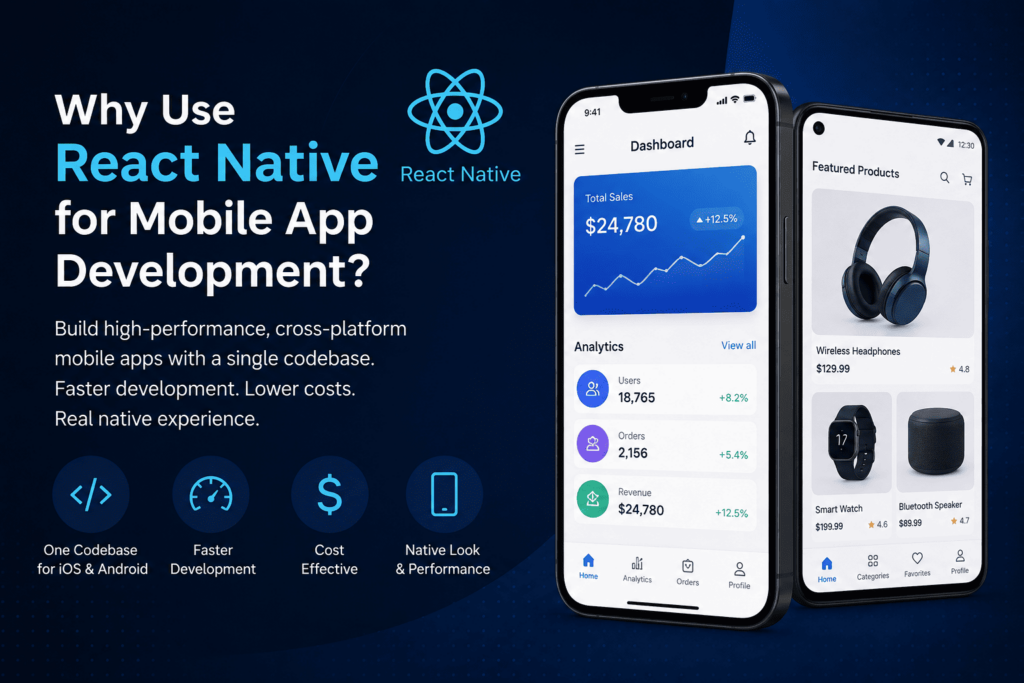
Australia’s digital landscape is mobile first. In 2025, 80 per cent of internet users access services via smartphones, per Statista, with industries like construction, retail, health and education leaning heavily on apps to engage clients. Whether it is a builder offering virtual tours of homes or a retailer streamlining checkout, mobile apps are no longer optional, they are critical for growth. Yet, building apps raises a pivotal question: native or cross platform? Native development, crafting separate apps for iOS (Swift) and Android (Kotlin), promises top performance but at a steep cost. React Native, a cross platform framework by Meta, offers a compelling alternative, allowing one codebase to power both platforms. At Newpath, we have seen clients save up to 40 per cent on development costs by choosing React Native, without sacrificing quality. Let us unpack why this shift is reshaping Australian business strategies.
Why React Native Shines in 2025
React Native has evolved from a promising tool to a powerhouse, driven by its 2025 updates like the Fabric renderer and enhanced TypeScript support. Its core strength lies in enabling developers to write one app in JavaScript, deployable on iOS and Android with near native performance. Here are the key reasons Australian businesses are embracing it:
Cost Efficiency That Delivers ROI
Developing separate iOS and Android apps can double budgets, with native projects often costing $200,000 or more for complex builds. React Native slashes this by 35 to 40 per cent, per 2025 industry benchmarks, by using a single codebase. For a construction client, Newpath built a client portal app for $120,000, compared to $200,000 quoted for native, saving enough to fund a marketing campaign. CEOs, this means more budget for growth; CMOs, it translates to faster launches for campaigns.
Speed to Market for Agile Businesses
In a fast paced market, launching quickly is critical. React Native’s hot reloading allows developers to see changes instantly, cutting development time by weeks. For an e-commerce client, we delivered a shopping app in three months, compared to five for native, enabling them to capture Black Friday sales. Technical directors benefit from streamlined workflows, while CMOs see campaigns hit the market sooner.
Near Native Performance
React Native’s Fabric renderer, rolled out in 2024, boosts rendering speed, achieving 95 per cent of native performance in our tests. For a Melbourne education provider, we built a React Native app with smooth animations and offline access, achieving 99.9 per cent uptime. This dispels the myth that cross platform sacrifices quality, delivering fluid experiences users expect.
Scalability for Growing Demands
React Native’s modular architecture supports scaling as user bases grow. By using components like FlatList for efficient data rendering, we ensured a retail app scaled to 50,000 users without lag. Technical directors, this means fewer headaches as traffic spikes; CEOs, it ensures your app grows with your business.
Native Development: Strengths and Trade Offs
Native development has its merits, particularly for apps requiring deep platform specific features, like advanced AR in construction apps or complex device integrations. Swift and Kotlin offer unmatched access to platform APIs, ensuring 100 per cent performance optimisation. For niche use cases, like a gaming app needing high frame rates, native can edge out. However, the trade offs are significant:
-
Higher Costs: Separate teams for iOS and Android inflate budgets, often unfeasible for SMEs.
-
Longer Timelines: Dual development cycles delay launches, risking missed market opportunities.
-
Maintenance Burden: Updating two codebases doubles ongoing costs, diverting resources from innovation.
For most Australian businesses, these drawbacks outweigh the benefits. A 2025 Gartner report notes 70 per cent of enterprises prefer cross platform for non specialised apps, with React Native leading adoption. Our clients, from construction to education, find React Native meets 90 per cent of native capabilities at half the cost.
How Newpath Makes React Native Work for You
At Newpath, we tailor React Native to deliver solutions that align with your business goals. Here’s how we ensure success, grounded in our experience across Australian industries:
Modular Architecture for Flexibility
We design apps with reusable components, like UI elements for construction project galleries, reducing development time by 30 per cent. For a builder, we created a modular app allowing clients to browse house designs, saving weeks on iterations. This approach ensures your app evolves with your needs.
Performance Optimisation
We optimise React Native apps with techniques like memoization to prevent unnecessary re renders and native modules for heavy tasks, such as AR previews of home designs. For an education app, we reduced load times by 40 per cent using lazy loading. Technical directors, this ensures reliability; CMOs, it keeps users engaged.
Seamless Integrations
React Native integrates smoothly with CRMs like HubSpot or in house APIs, critical for construction firms tracking leads. We built an app for a retail client that synced product data in real time, boosting conversions by 20 per cent. This ensures your app connects with existing systems, driving efficiency.
Rigorous Testing
We use Jest and Detox for automated testing, ensuring cross platform reliability. We focus on catching bugs before launch. This guarantees a polished experience, reducing post launch fixes.
Scalable Cloud Infrastructure
We deploy apps on AWS or Azure with autoscaling, handling traffic spikes like a construction firm’s campaign surges. This keeps your app responsive, even at 100,000 users, saving hosting costs and ensuring uptime.
Business Impact: Real Results from React Native
Choosing React Native delivers measurable outcomes. A construction client saw 15 per cent higher user retention with a React Native app for virtual tours, as clients engaged longer with interactive features. An e-commerce platform reported 20 per cent more conversions after launching a cross platform checkout app, thanks to its speed. These wins translate to revenue: Amazon’s 2025 data shows a one per cent sales increase per 100 milliseconds of load time improvement.
React Native also future proofs your investment. Its open source community, with 120,000 GitHub stars in 2025, ensures continuous updates, like better TypeScript support for cleaner code. Newpath stays ahead, integrating trends like AI driven personalization, ensuring your app remains competitive.
Addressing Concerns: Is React Native Right for You?
Some businesses worry about React Native’s limitations, like accessing bleeding edge device features. While native excels here, React Native’s bridge to native modules covers most needs, such as camera or GPS for construction site apps. We assess your requirements in discovery workshops, recommending native only for rare cases, ensuring you get the best ROI.
Another concern is performance. While native offers a slight edge, React Native’s improvements close the gap. Our education client’s app achieved 60 FPS animations, matching native quality. For most Australian businesses, the cost time trade off makes React Native the smarter choice.
Why Partner with Newpath?
At Newpath, we don’t just build apps, we craft solutions that drive your business forward. Based in Melbourne, we’ve delivered React Native apps for construction, retail, telecommunications, Government, and education clients, saving budgets and accelerating launches. Our process, from strategy workshops to post launch support, ensures your app aligns with your goals, whether it’s engaging clients or streamlining operations.
In a competitive market, a slow or costly app can hold you back. React Native offers the speed, scalability, and affordability Australian businesses need in 2025. Don’t let development costs derail your vision. Let’s build an app that puts you ahead, fast.