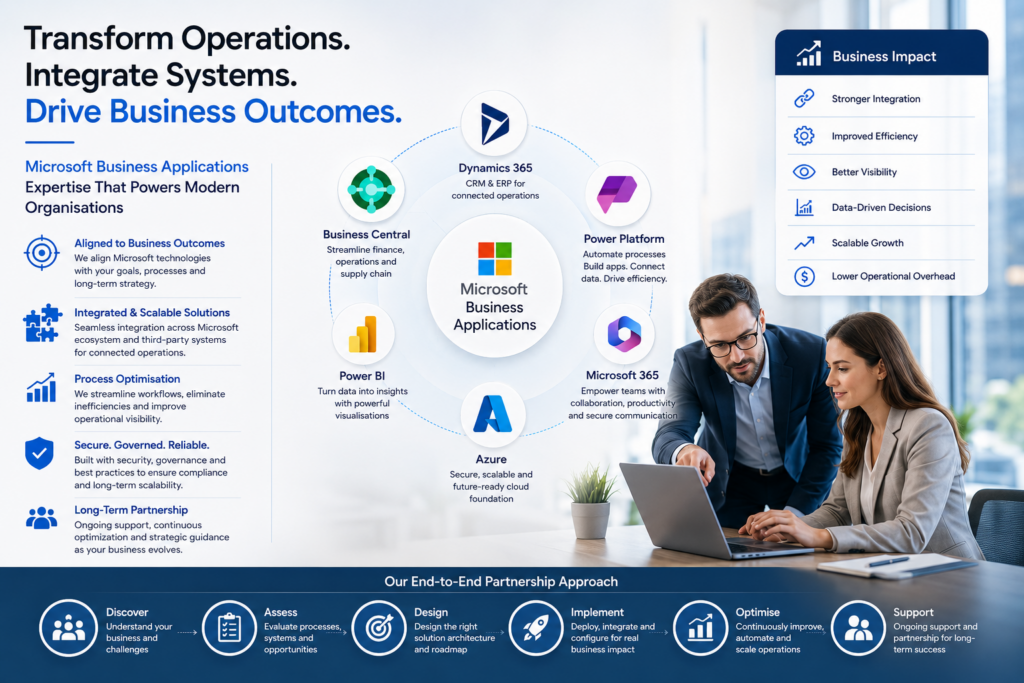





Implementing Microsoft Dynamics 365 (D365) is a transformative opportunity for organisations aiming to modernise operations, streamline workflows, and enhance customer engagement. However, the path to a successful deployment is complex and demands strategic planning, clear communication, and strong technical governance. Without a structured roadmap, businesses risk delays, cost overruns, and underutilised functionality.
- Define Clear Business Objectives
Before beginning implementation, identify exactly what you want to achieve with Dynamics 365. Is your goal to improve customer relationship management, unify sales and marketing, or streamline finance and operations? Defining measurable outcomes helps align the system’s capabilities with your business needs.
Engage key stakeholders early to ensure goals are both realistic and strategically aligned. Documenting key pain points in current systems and desired improvements will guide customisation and configuration decisions later in the project.
- Assemble a Skilled Project Team
A D365 implementation succeeds when the right mix of business and technical expertise is present. Your team should include internal leaders who understand business processes and external experts who bring in-depth Dynamics knowledge.
Partnering with experienced dynamics 365 consulting services providers ensures access to certified professionals who understand best practices and can guide you through complex integration and migration challenges. They can also help manage project timelines, mitigate risks, and ensure alignment with Microsoft’s implementation framework.
- Conduct a Comprehensive System Audit
Assess your existing systems and processes before deployment. Identify which applications will be integrated or replaced and where data resides. A system audit clarifies dependencies and helps establish integration points between Dynamics 365 and third-party solutions like ERP, marketing automation, or HR platforms.
This audit should also cover infrastructure readiness — ensuring network bandwidth, cloud configurations, and user devices meet D365 performance requirements.
- Data Preparation and Migration Strategy
Data migration is often one of the most challenging aspects of implementation. Start with a thorough data audit to assess data quality, identify duplicates, and remove outdated or irrelevant records.
Develop a migration plan that specifies data sources, transformation rules, and validation criteria. Testing migration in a sandbox environment helps detect and resolve issues before the live rollout. Maintaining data integrity throughout this process is critical for system reliability and user trust post-launch.
- Customisation and Configuration
One of the biggest advantages of Dynamics 365 is its flexibility. However, businesses should balance the need for customisation with system sustainability. Excessive custom coding can make future upgrades complex and costly.
Instead, focus on using D365’s built-in configuration tools — workflows, business rules, and Power Platform integrations — to meet operational needs. Use custom development only where it adds genuine value. A governance model should be in place to manage change requests and track system modifications.
- Integration with Other Business Systems
A well-implemented D365 solution should not operate in isolation. Integrate the system with essential applications such as Microsoft 365, Power BI, and external databases to create a seamless flow of information across departments.
Integration not only eliminates data silos but also enhances reporting accuracy and decision-making. For example, connecting D365 with Power BI allows executives to gain real-time insights into sales performance, customer trends, and financial forecasts.
- User Training and Change Management
Technology adoption depends heavily on people, not just systems. Early engagement, clear communication, and hands-on training are crucial to user acceptance. Develop a change management strategy that includes stakeholder communication, role-based training sessions, and feedback loops.
Training should focus on demonstrating how D365 simplifies daily tasks and empowers users to achieve their goals more efficiently. Providing user guides, video tutorials, and help desk support post-launch helps reinforce adoption.
- Testing and Quality Assurance
Comprehensive testing ensures that your D365 system functions as intended. Perform multiple testing cycles, including unit testing, integration testing, and user acceptance testing (UAT).
Testing should cover:
- Data integrity checks
- System performance under load
- Workflow automation and business logic
- Role-based access controls
- Go-Live Planning
A smooth go-live requires careful coordination. Define your deployment strategy — whether it’s a phased rollout or a full system launch. Create a detailed go-live checklist covering data validation, user access setup, and backup plans.
Ensure support teams are on standby to handle unexpected issues immediately after launch. Clear communication across departments helps maintain confidence and stability during this transition.
- Post-Implementation Optimisation
Once the system is live, continuous improvement becomes the next priority. Monitor performance metrics, gather user feedback, and identify areas for enhancement. Dynamics 365 is designed to evolve with your business — regular updates, new integrations, and additional modules can extend its value over time.
Establish governance processes for periodic reviews, security updates, and feature enhancements. Ongoing collaboration with your Dynamics 365 partner ensures your system remains aligned with changing business requirements.
Implementing Microsoft Dynamics 365 is a significant investment that can deliver transformative business value when approached strategically. By following a structured checklist — from defining goals and preparing data to training users and optimising post-launch — organisations can reduce risks and maximise outcomes.
With the right combination of internal leadership and expert external guidance, businesses can ensure a successful transition to this modern, cloud-based CRM and ERP ecosystem. Partnering with a trusted dynamics 365 consulting services provider ensures that every phase of implementation is handled with precision and foresight — enabling your organisation to fully leverage the power and flexibility of Microsoft Dynamics 365.